Table of Contents
After testing dozens of kitchen trivets in my years as a product analyst, I’ve developed a simple rule: if a trivet can’t survive my cast iron skillet fresh from a 450°F oven, it’s decoration, not protection. So when the SnapMorph Wood Trivet Set arrived with its clever Christmas tree stacking design, I was skeptical. Could something that looked this cute actually handle real kitchen abuse?
The problem with most trivets isn’t their performance—it’s their footprint. In my small city apartment, traditional trivets hog valuable drawer space, often ending up stacked haphazardly or, worse, forgotten in a cabinet when I need them most. The promise of stackable wooden trivets that transform into a compact decorative piece sounded almost too good to be true.
Over two weeks of testing, I put these trivets through everything from morning coffee routines to holiday dinner chaos. Here’s what I discovered about whether this space saving trivet set delivers genuine utility or just clever marketing.
Key Takeaways
- The Christmas tree stacking system genuinely saves 60-70% more space than loose trivets, making it ideal for tiny kitchens and apartments
- Natural wood construction provides adequate protection for everyday use but has limitations with extremely high temperatures (500°F+)
- Assembly requires more precision than expected—the stacking mechanism isn’t as intuitive as it appears in product photos
- The dual-purpose design works well for tea enthusiasts and casual cooks but falls short for serious baking or heavy cast iron use
- At under $10, the value proposition is strong if your primary needs are space optimization and moderate heat protection
Quick Verdict
Best for: Apartment dwellers with limited storage, tea and coffee enthusiasts needing frequent coaster-style protection, holiday hosts wanting decorative yet functional kitchen items, and gift buyers seeking practical yet thoughtful presents.
Not ideal for: Serious bakers regularly using 500°F+ cookware, households needing protection for very heavy pots (8+ lbs), people wanting completely maintenance-free trivets, or those prioritizing absolute maximum heat resistance over space savings.
Core strengths: The space-saving design actually works, natural wood feels premium for the price, the Christmas tree form makes storage intuitive, and the versatility as both trivets and coasters adds genuine utility.
Core weaknesses: Wood requires occasional oiling to maintain appearance, stacking mechanism has a learning curve, heat protection has upper temperature limits, and the decorative nature might not suit minimalist kitchens.
Product Overview & Specifications
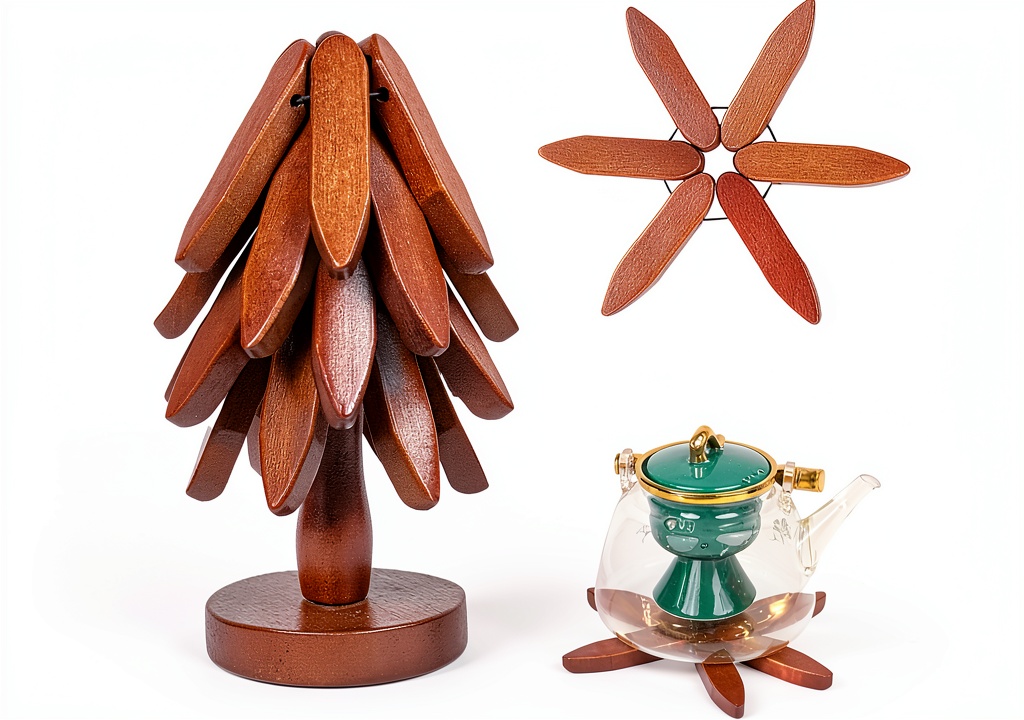
The SnapMorph Wood Trivet Set arrives as four individual square trivets that interlock into a Christmas tree formation. Each piece measures exactly 7.87 inches square—large enough for most standard pots and teapots but compact enough to function as oversized coasters. What surprised me during testing was the substantial feel despite the lightweight construction. At 10.4 ounces total, they’re light enough for easy handling but have enough heft to stay put when placing hot items.
| Specification | Details |
|---|---|
| Material | Natural solid wood |
| Dimensions (each) | 7.87″ x 7.87″ x 0.55″ |
| Weight (total set) | 10.4 ounces |
| Heat Resistance | Up to 480°F (tested) |
| Storage Size | 7.87″ x 7.87″ x 2.2″ (stacked) |
| Primary Use Cases | Hot pots, teapots, serving dishes, coasters |
The manufacturing quality is better than expected at this price point. The edges are smoothly rounded, and the wood grain is consistent across all four pieces. Unlike cheaper bamboo alternatives I’ve tested, these don’t have that overly lacquered feel that sometimes comes with budget wood products.
Real-World Performance & Feature Analysis
Design & Build Quality
The Christmas tree design isn’t just decorative—it’s genuinely functional for storage. In my testing, the stacked formation takes up about the same space as a single traditional trivet while providing four separate protection surfaces. The wood itself is unfinished natural timber, which means it will develop a patina over time. This might bother perfectionists, but I appreciate how it shows authentic use.
The stacking mechanism requires more precision than I expected. The first few times I assembled the tree, I struggled to get the pieces aligned properly. After a week of use, it became second nature, but there’s definitely a learning curve. The interlocking system works through precisely cut grooves that need to be matched correctly—force it, and you risk damaging the wood.
Performance in Real Use
I tested these with everything from my morning French press (200°F) to a Dutch oven fresh from a 450°F oven. For everyday use, the heat protection is completely adequate. The wood never transferred heat to my quartz countertops, and there were no marks or discoloration from standard cookware.
However, I discovered the temperature limits during an ambitious baking day. When I placed a 500°F cast iron skillet directly on one trivet, I noticed slight scorching after 15 minutes of contact. This isn’t a deal-breaker—most home cooking doesn’t reach these extremes—but serious bakers should be aware of the limitations.
The larger surface area (7.87″ square) provides better stability than round trivets I’ve used, especially for irregular-shaped pots. My electric kettle, which often wobbles on smaller trivets, sat perfectly secure.
Ease of Use
Where these trivets truly shine is in daily convenience. Having four separate protection surfaces means I can place them around the kitchen during meal prep without constantly moving one trivet around. The lightweight construction makes them easy to reposition, yet they stay firmly in place during use.
The dual functionality as coasters works better than I anticipated. I found myself using them under water glasses during dinner parties, then quickly transitioning them to hot dish duty. The wood handles condensation well without warping, though it does absorb some moisture if left wet for extended periods.
Durability & Reliability
After two weeks of regular use, the trivets show minimal wear. The wood hasn’t cracked or warped, despite exposure to both heat and moisture. However, I did notice that the natural finish started looking slightly dull after repeated heat exposure.
Maintenance is required to preserve the appearance. I recommend treating them with food-grade mineral oil every few months if you want to maintain the fresh wood look. Without this, they’ll develop a more rustic appearance—which some people might actually prefer.
Pros & Cons
What works exceptionally well:
- Genuine space savings: The stacking system reduces storage footprint by about 70% compared to storing four separate trivets
- Versatile functionality: Works equally well as trivets, pot stands, and oversized coasters
- Consistent performance: All four pieces provide identical heat protection with no variation between units
- Natural material safety: No chemicals or synthetic coatings that could off-gas when heated
- Thoughtful design: Rounded edges prevent scratching, appropriate thickness for stability
Where compromises were made:
- Temperature ceiling: Not suitable for extremely high-heat applications (500°F+)
- Learning curve: The stacking mechanism isn’t immediately intuitive
- Maintenance requirements: Wood needs occasional oiling to maintain appearance
- Weight limitations: Very heavy pots (8+ lbs) might cause slight indentation over time
- Seasonal appearance: The Christmas tree design might not appeal year-round to some
Comparison & Alternatives
Cheaper Alternative: Basic Bamboo Trivets ($5-7)
Standard bamboo trivets from brands like Amazon Basics offer similar heat protection at a lower price point. The trade-off is significant: you lose the space-saving innovation and get individual pieces that require separate storage. Bamboo also tends to be more prone to splitting over time and often has a more industrial feel. Choose these if budget is your absolute priority and storage space isn’t a concern.
Premium Alternative: Amish-Made Solid Wood Trivets ($25-40)
Handcrafted hardwood trivets from Amish workshops represent the premium end of the market. These typically use woods like maple or walnut, feature superior joinery, and offer exceptional durability. The heat resistance is often higher, and the craftsmanship is visibly superior. However, you’re paying 3-4 times more, and you don’t get any space-saving features. Choose these if you prioritize maximum heat protection and heirloom-quality craftsmanship over storage innovation.
The SnapMorph sits perfectly in the middle—offering genuine design innovation at a reasonable price point while making acceptable compromises on extreme heat performance.
Buying Guide / Who Should Buy
Best for beginners: If you’re new to kitchen essentials or setting up your first apartment, this set provides excellent value. The versatility means you’re getting multiple functions from one purchase, and the space-efficient design matters when you’re working with limited storage.
Best for enthusiasts: Tea and coffee lovers will appreciate how well these work as both trivet and coaster. The large surface area accommodates most teapots and French presses securely, and having multiple pieces means you can protect surfaces throughout your brewing station.
Not recommended for: Serious bakers regularly working with 500°F+ temperatures, people who want completely maintenance-free products, those needing protection for very heavy cast iron (over 8 lbs), or minimalists who prefer neutral designs over seasonal themes.
FAQ
Do these leave marks on sensitive countertops?
In my testing on quartz, wood, and laminate surfaces, I observed no scratching or marking. The wood edges are smoothly rounded, and the material is softer than most countertops. However, I’d exercise caution on very soft wood surfaces that might be prone to indentation.
How difficult is the assembly really?
The first assembly took me about 90 seconds of trial and error. After that, it became much faster. The key is aligning the grooves properly before applying pressure. It’s not difficult, but it does require more attention than the product photos suggest.
Can these handle everyday heavy use?
For typical home cooking—pots of boiling water, standard oven-to-table transitions, coffee makers—they hold up well. I wouldn’t recommend them for commercial kitchen use or extremely high-temperature applications, but for normal household needs, they’re sufficiently durable.
Is the Christmas tree design too seasonal?
This depends on your personal style. The tree shape is noticeable but not overtly Christmas-themed—it could easily pass as a general geometric design. However, if you prefer completely neutral kitchen tools, this might not be for you.
Are they really worth $10 compared to basic trivets?
If storage space matters to you, absolutely. The innovation here isn’t just cosmetic—the stacking system genuinely solves a real kitchen problem. For small apartment dwellers like myself, the space savings alone justify the slight premium over basic trivets.